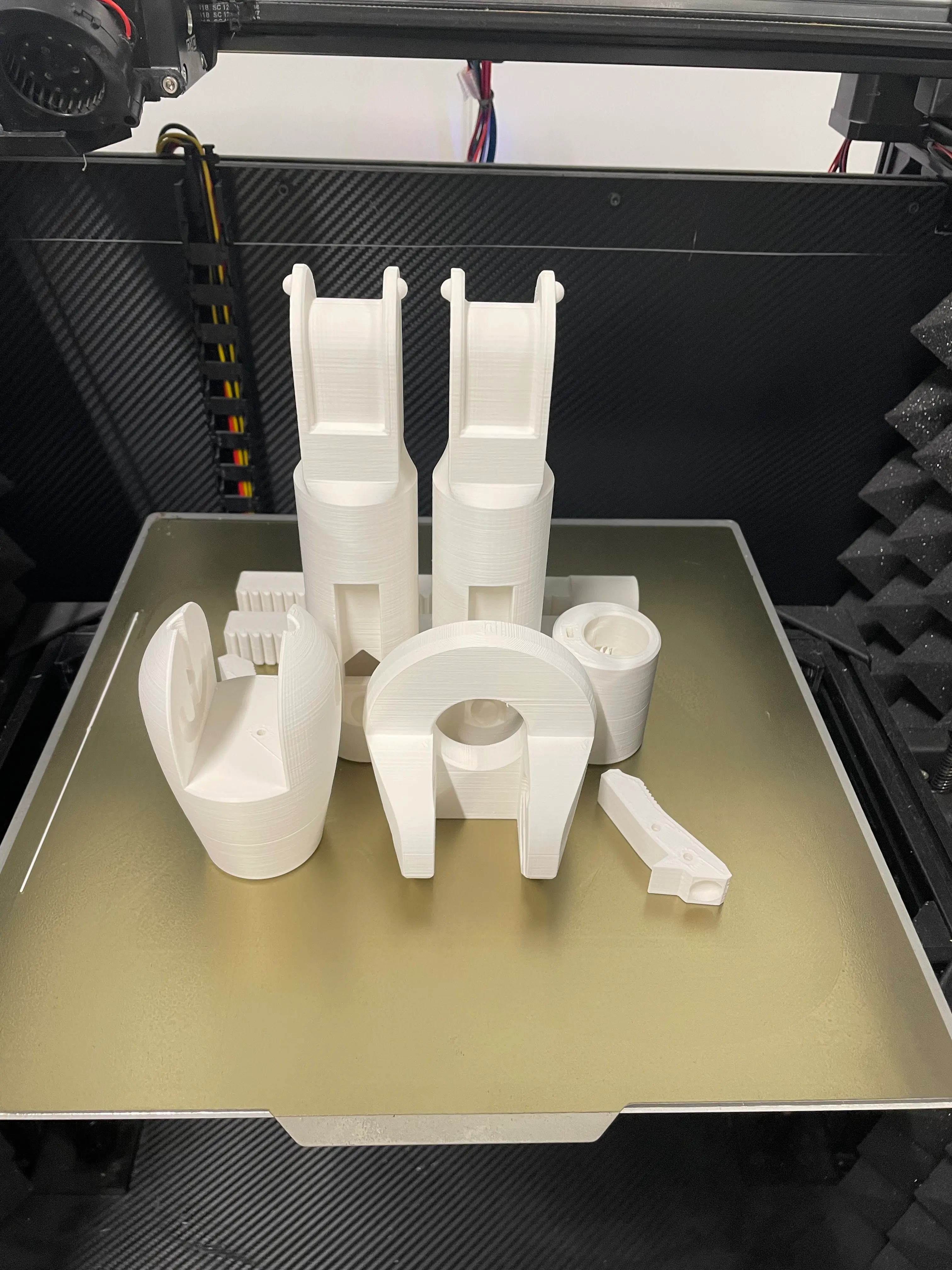
Articulated Mannequin Arm
A museum needed a mannequin arm for displaying fragile historical garments, including pieces worn by Napoleon Bonaparte and other figures from history. These costumes cannot simply be hung flat. To be properly understood, they must be supported from within and posed as they were actually worn, allowing the fabric to drape naturally and present the garment as a lived object rather than an artifact behind glass. The challenge was that many period garments have very narrow sleeves, requiring an arm thin enough to fit inside without straining or distorting delicate fabric.
The contradiction was that the arm also needed to be exceptionally strong. Museum garments are often heavy and remain on display for months or years, so the joints had to hold a precise pose indefinitely without sagging or drifting under load. The solution focused on redesigning the articulation itself, reducing the joint's size while preserving the holding force of a much larger mechanism. The result was an articulated arm slim enough to disappear inside narrow historical sleeves, yet robust enough to support heavy costumes in lifelike, stable poses for long-term exhibition.